


 The History of the Snow Cone
November 11, 2015
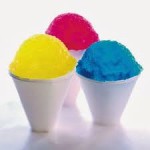
Snow cones are desserts made from shaved or ground up ice that are served in North America in paper cones or foam cups. The shavings are topped with flavored sugar syrup.
In some parts of North America, the terms “snowball” and “snow cone” can refer to different things. If a distinction is made, a snowball is made of finely shaved ice like fresh snow and a snow cone is made of coarse and more granular ground up ice.
During the American Industrial Revolution in the mid 19th century, ice became commercially available. Ice houses in New York sold ice to places such as Florida and transported it in wagons in huge blocks. The wagons would pass through Baltimore. Children would request scrapings of ice, and their parents began to add flavorings.
By the 1870s, theaters in Baltimore began selling snowballs in the summer to keep their patrons cool. Hand shavers were used to shave ice.
East Dallas resident Samuel Bert introduced the snow cone at the State Fair of Texas in 1919. He patented an ice crusher machine in 1920, and by the early 1950s he was selling about a million snow cones per year at the fair.
Ernest Hansen patented the first ice block shaver in New Orleans in 1934. He and his wife, Mary, opened a “sno ball” shop that is still run by the family.


 Ice Scream Social is an ice cream truck and event rental company serving Greater Boston, MA, including